
A Classic Thanksgiving Menu for the Traditionalist
Bring on the classics.
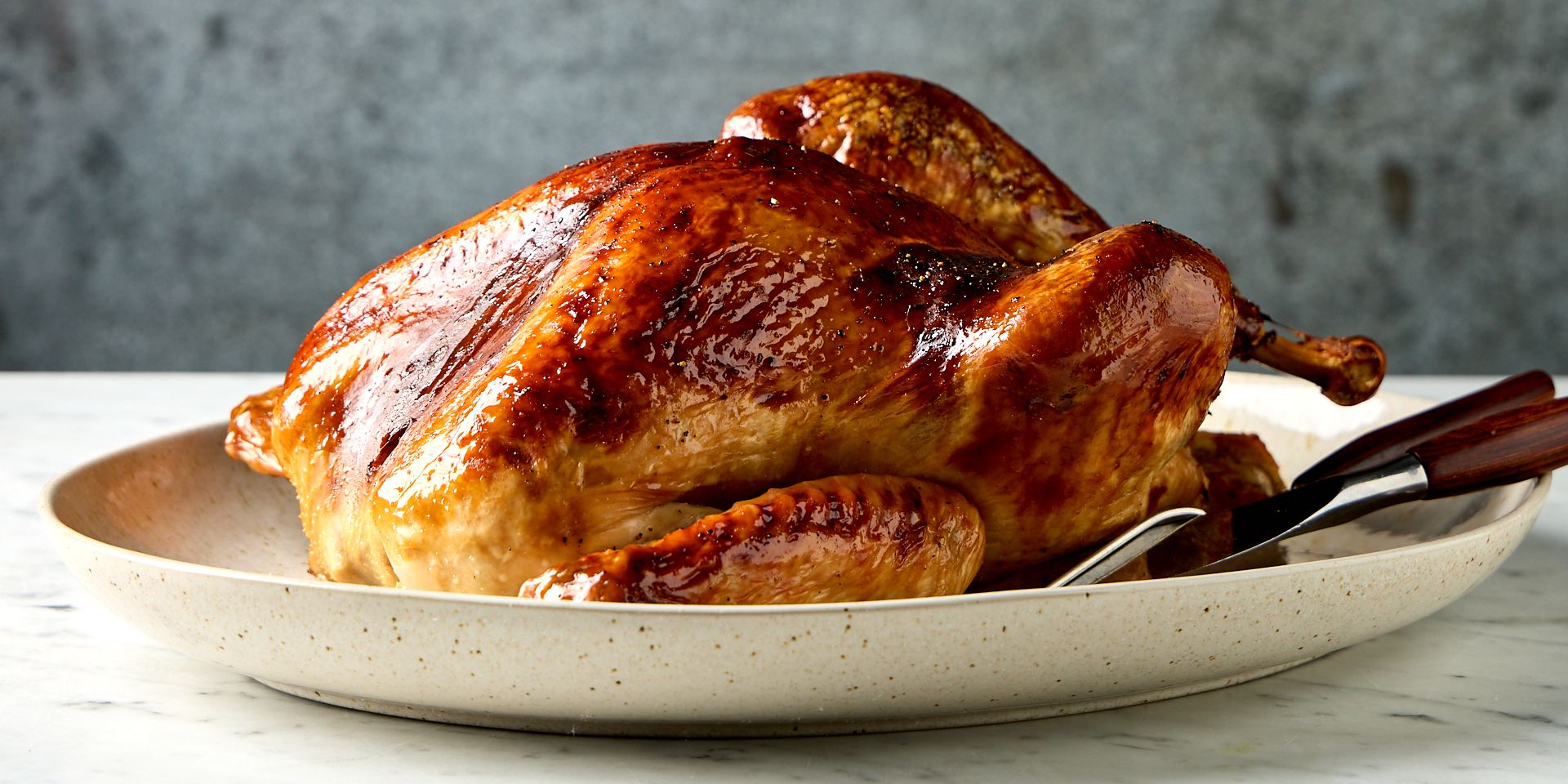
This is the menu for the Thanksgiving purists, the ones who like their turkey served Rockwell-style, a stuffing that’s heavy on sage and thyme, and pumpkin pie for dessert.

The Bird: Maple and Soy Glazed Dry-Brined Turkey
If you want a whole, lacquered bird, this is the way to go. There’s no spatchcocking—no butchery at all, actually—just a big, dry-brined burned with salty-sweet glaze made with maple syrup and soy sauce.
Not only is dry brining far easier than wet brining, the flavor it produces is deeper and more concentrated. The texture of a dry-brined turkey is superior, too, as it isn’t waterlogged. Dry brining simply requires salting the bird and refrigerating it long enough for the salt to draw moisture from the proteins, dissolve in that moisture and, finally, be absorbed by the muscle fibers. The salt then breaks down some of the proteins, resulting in a more tender texture while also improving moisture retention.
Our dry-brine contains a surprise ingredient: powdered buttermilk. The lactic acid in powdered buttermilk assists with tenderization, particularly in the meat nearest the surface, which otherwise tends to dry out.

The Stuffing: Easy-Bake Herbed Stuffing
Inspired by Stove Top, but better, this stuffing is heavy on the aromatics. But mincing and sautéing the aromatics that help turn bland bread tasty is a chore. We speed things up – and maximize flavor – by giving butter, fresh herbs and raw shallots a whiz in the food processor, then using the resulting paste to season bread cubes while they toast in the oven. We found that any sturdy, high-quality sliced sandwich bread from the grocer worked well here. As the bread bakes, the raw bite of the shallots cooks off leaving behind a mellow tang. Chopped celery is tossed with melted butter and mixed into the bread, softening as the cubes toast. The mixture then is moistened with chicken broth and a touch of cream before being baked to create a relatively carefree stuffing that will satisfy the even strictest traditionalists.

The Mash: Butter-Braised Mashed Potatoes
The trouble with most mashed potatoes? They taste more of milk or cream than potatoes. And they often end up gluey. So this recipe skips the liquid dairy and instead simmers russets in a minimal amount of water that is cooked off, not drained. This ensures all the potato flavor stays in the pot. We also cook the potatoes in a generous amount of butter—18 tablespoons! As the fat melts, it coats the potatoes’ starch molecules and prevents them from becoming gluey. We tested numerous potato varieties, but russets were our favorite. They do require a rinse before cooking to wash away excess starch, but they yield fluffy mashed potatoes that taste distinctly of, well, potatoes. And butter. This recipe gives instructions for serving the potatoes right away, as well as for making them in advance. Either way, the texture is best when the spuds are hot, so we recommend warming the serving bowl before filling it.

The Sweet Potato: Sweet Potato Gratin with Vanilla Bean and Bay Leaves
This is the closest thing we have to a traditional sweet potato casserole—a classic for good reason, though we felt the gooey marshmallows had to go. We started by roasting the sweet potatoes, a simple, hands-off process that can be done a day ahead. Roasting rather than boiling produces cleaner, deeper flavors and a better, less watery texture. In lieu of marshmallows we infuse cream with vanilla bean and bay leaves and add a dusting of black pepper for an overall effect that hints at marshmallow but is far more nuanced, compelling and aromatic. A crunchy topping of dark brown and white sugar with a touch of cayenne keeps the dish adults table-appropriate.

The Vegetable Side: Green Beans with Mushrooms and Sherry-Mustard Vinaigrette
We borrowed some of the flavors from classic green bean casserole to create this simple, bright green bean side. The soy sauce in the vinaigrette boosts the natural umami of the mushrooms, and a mixture of chopped and sliced mushrooms makes the dish more visually and texturally interesting. The vinaigrette can be refrigerated up to a day in advance; bring to room temperature before using. The mushroom and shallot mixture can also be cooked ahead. You can, of course, add crispy fried onions if you are so inclined.

The Bread: Butter Rolls
Butter rolls are reminiscent of Parker House rolls, with soft, tender, pillowy crumb and rich, sweet flavor. To nail the texture, we use a combination shortening and butter, as well as both milk and water. The rolls are best served warm, but leftovers keep well in an airtight container at room temperature for up to three days.

The Pie: Pumpkin Pie with Honey-Orange Whipped Cream
We love pumpkin pie, but we don’t love how dense, cloying and overspiced it can be. We wanted a lighter, fresher take with a pronounced pumpkin flavor. Canned pumpkin puree was a great place to start, but we intensified its flavor by giving it a quick sauté with dark brown sugar. This cooks off excess moisture and lends caramel notes to the mixture. A little bourbon adds complexity that complements the earthiness of the pumpkin and brown sugar, but an equal amount of orange juice works well, too. To give the filling tang and richness, we add crème fraîche instead of the typical evaporated milk.
Join the conversation on Facebook, Instagram, TikTok and Pinterest.
And if you're looking for more Milk Street, check out our livestream cooking classes with our favorite chefs, home cooks and friends for global recipes, cooking methods and more.

Claire Lower
Claire Lower is the Digital Editor for Christopher Kimball’s Milk Street, with over a decade of experience as a food writer and recipe developer. Claire began writing about food (and drinks) during the blogging boom in the late 2000s, eventually leaving her job as a lab technician to pursue writing full-time. After freelancing for publications such as Serious Eats, Yahoo Food, xoJane and Cherry Bombe Magazine, she eventually landed at Lifehacker, where she served as the Senior Food Editor for nearly eight years. Claire lives in Portland, Oregon with a very friendly dog and very mean cat. When not in the kitchen (or at her laptop), you can find her deadlifting at the gym, fly fishing or trying to master figure drawing at her local art studio.

